
Synthetic sources in AI search: how to protect AEO authority
A practical guide to preventing AI answers from relying on synthetic or low-quality sources and strengthening AEO authority with verifiable evidence.
Blog
Research, methods and practical observations about how companies become easier for AI systems to understand, cite and recommend.
A practical guide to preventing AI answers from relying on synthetic or low-quality sources and strengthening AEO authority with verifiable evidence.
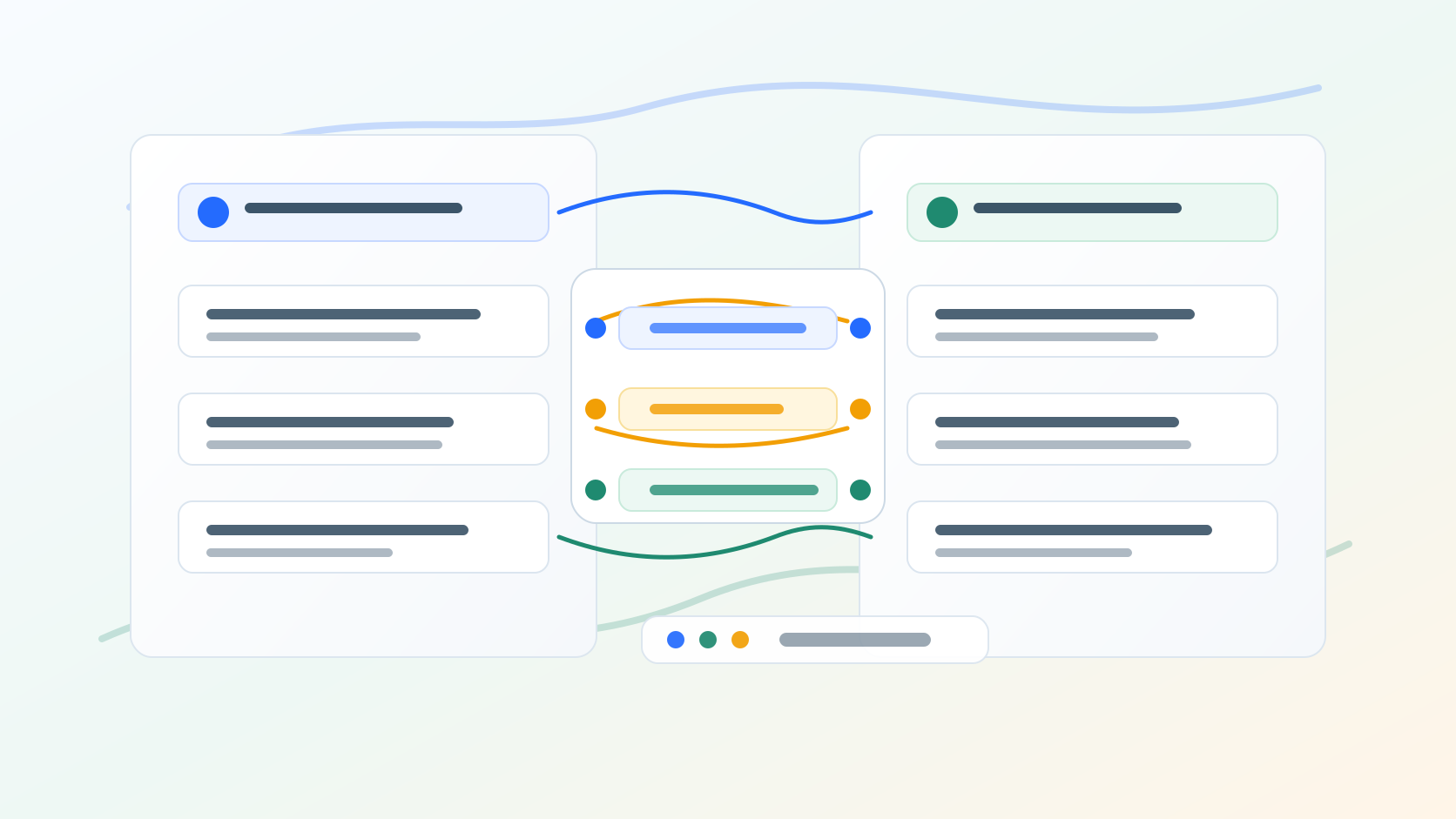
A practical guide to making Spanish, English and other localized pages equivalent, crawlable and directly connected for AI search and answer engines.
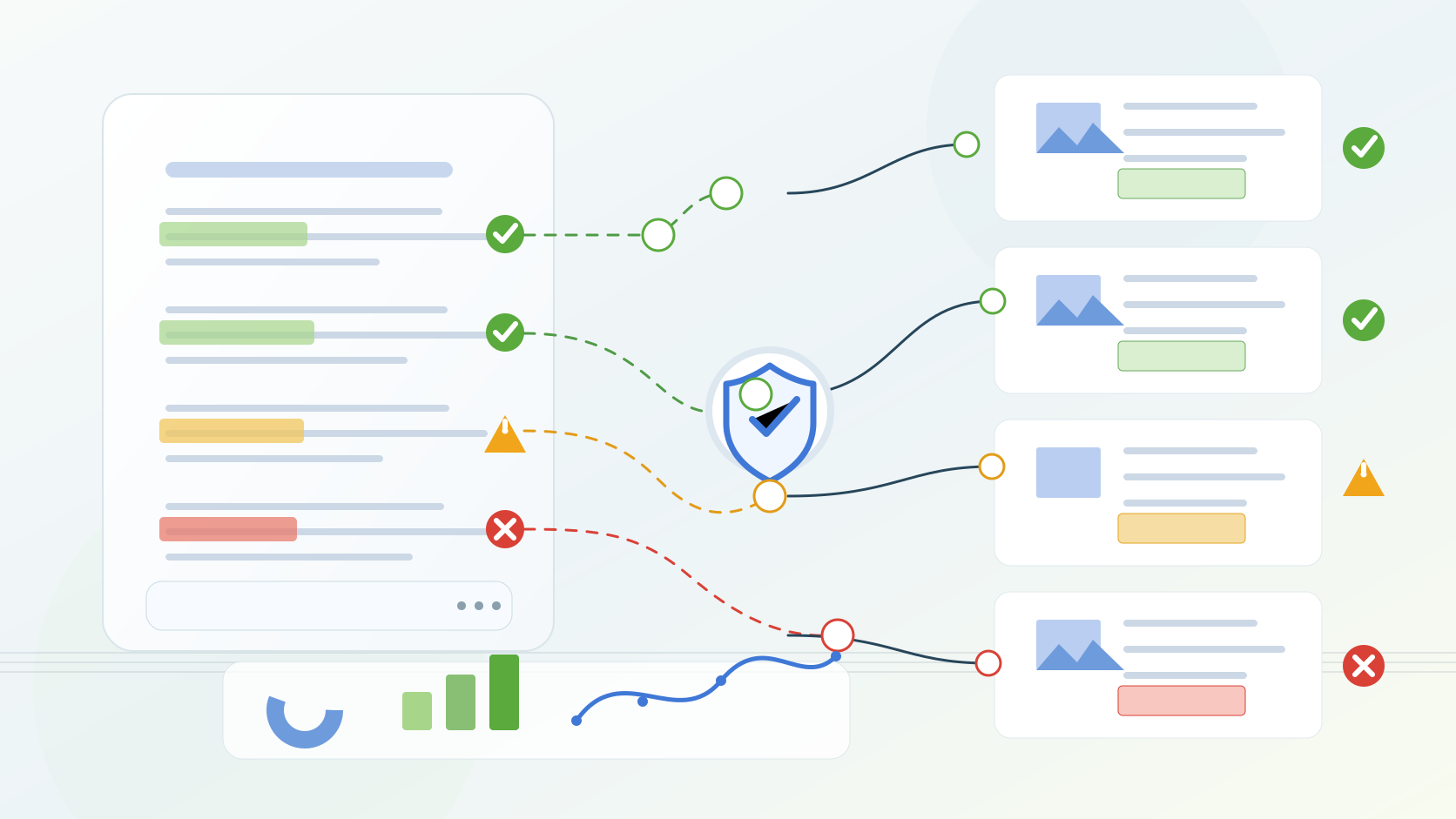
A practical guide to auditing whether AI-generated answers interpret, summarize and cite a brand's most important claims accurately.
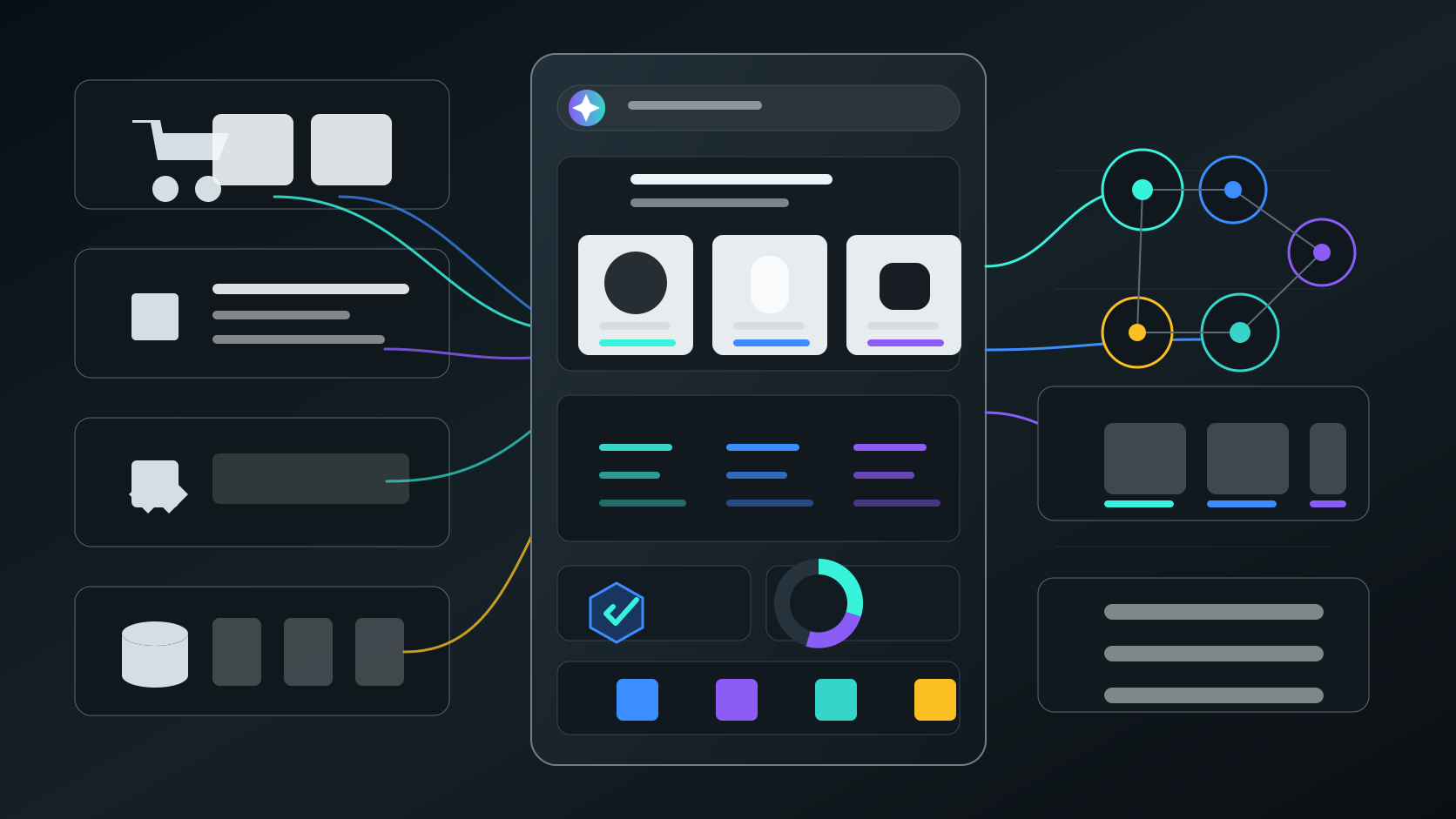
A practical guide to preparing product, comparison and service pages for AI shopping assistants, product discovery and answer-engine recommendations.

A practical guide to building a useful llms.txt file, aligning it with robots.txt, sitemaps and citable content, and avoiding false expectations in answer engines.

Learn why answer engines often trust external sources before a brand's own site, and how to build distributed authority without fake mentions or spam.

Learn why an AI answer can mention a brand without citing its website, and how to measure the gap between awareness, evidence and answer-engine trust.

A practical guide to separating Search Console opt-outs, robots.txt crawler rules and platform AI controls so answer engines can still find and cite the right pages.

Hidden retrieval pipelines help explain why a single ChatGPT citation check is not enough, and how AEO teams should measure visibility with repeated samples.

Learn why answer engines cite sources that prove a specific claim, not only the biggest domain, and how to build factual authority for AEO.

Audit the facts answer engines use to identify, compare and cite your brand across your site, schema and third-party sources.

Learn why guaranteed ChatGPT, Gemini or AI Overview placements are a red flag, and how to evaluate AEO work with evidence instead.

Learn why ranking on page one still matters for Google AI Overviews, but no longer works as a reliable proxy for citation visibility.
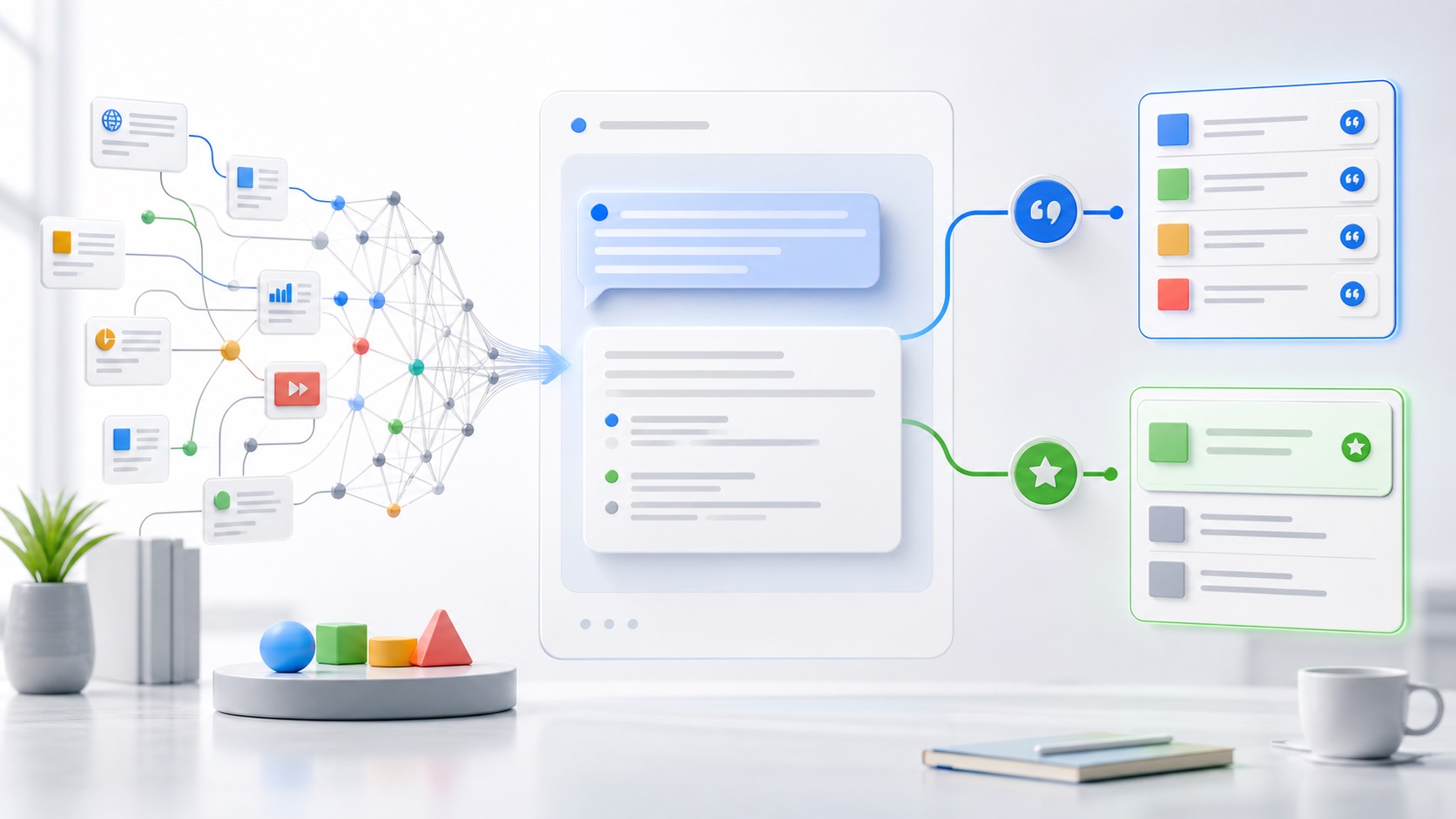
Learn why AI citations, brand mentions and recommendations must be measured separately, and how to turn answer-engine visibility into commercial evidence.

Learn how to map the source categories, third-party domains and evidence gaps that influence whether answer engines cite, mention or recommend a brand.

Learn why citation shifts in ChatGPT, Gemini, Perplexity, Claude and Google AI Mode must be measured per engine, not as one blended AEO score.
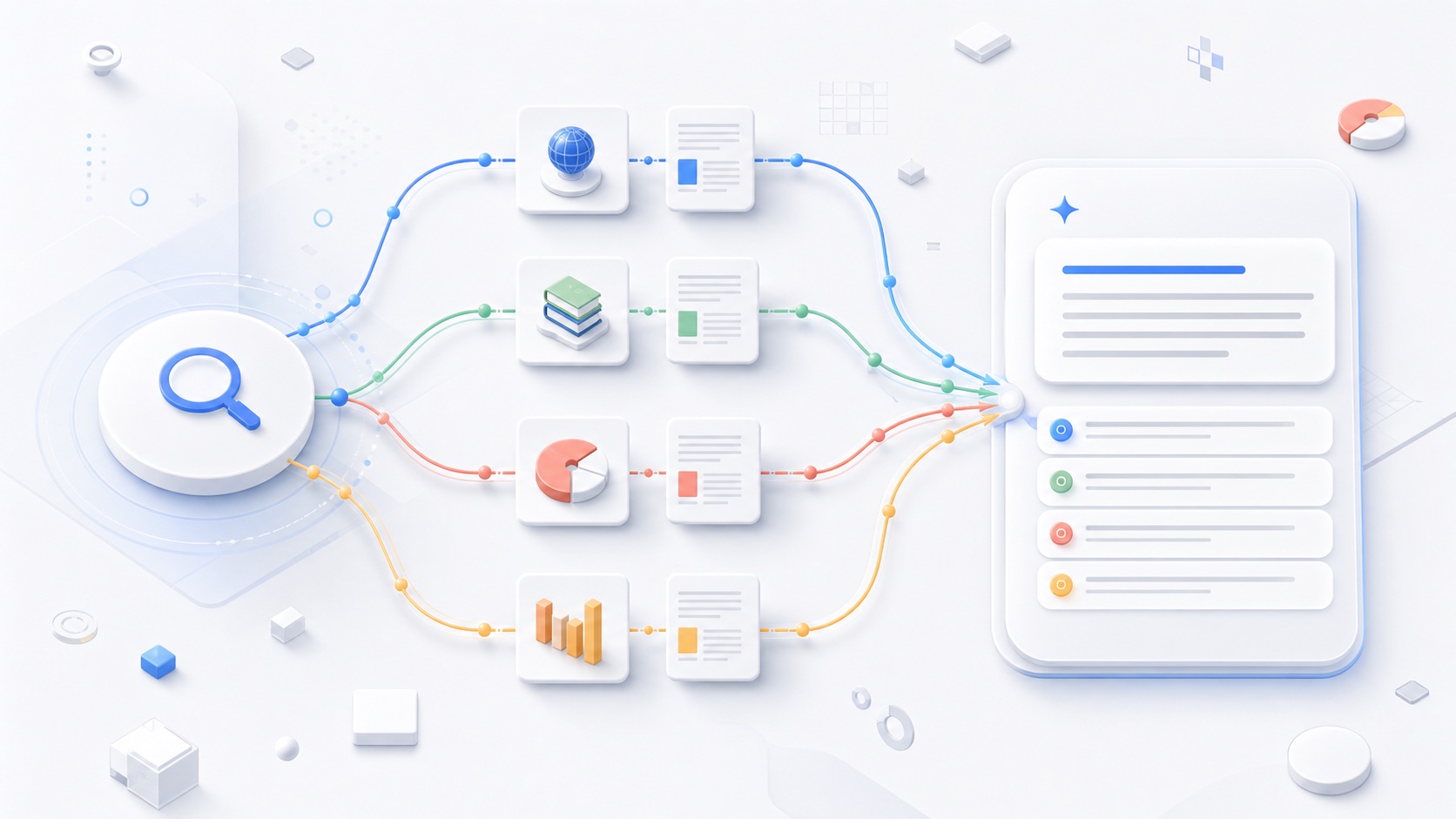
A practical guide to mapping answer-engine subqueries, strengthening citable pages and avoiding duplicate or superficial content.

A practical AEO workflow for freezing prompts, competitors, engines and citation metrics before an answer engine changes its model.

A practical AEO guide to turning thin pages into retrieval-ready, source-backed content that answer engines can understand, verify and cite.

A practical AEO guide to evaluating AI visibility platforms as they move from monitoring dashboards into content workflows and execution.

A practical AEO framework for measuring how often answer engines mention, cite and recommend your brand versus competitors.

A practical guide to turning claims, data and brand proof into pages that ChatGPT, Gemini, Perplexity, Copilot and AI Overviews can understand, verify and cite.

A practical guide to separating legitimate AEO from AI answer manipulation, paid citations, fake recommendations and spam tactics.

A practical AEO guide to engine-level citation divergence: why ChatGPT, Gemini, Perplexity, Claude and Google AI Mode use different sources, and how to measure it.

A practical AEO guide to diagnosing ChatGPT citation changes, separating platform volatility from your own work and responding without chasing noise.

A practical guide to creating a useful llms.txt file, what to avoid, and how it fits with sitemaps, robots.txt, structured data and AEO measurement.

A practical guide to the schema.org markup that helps answer engines understand entities, definitions, evidence and datasets without chasing schema hacks.

A practical AEO framework for choosing, grouping and measuring prompts so AI visibility reports show citations, mentions, recommendations and competitors clearly.

A practical guide to AI crawler access for AEO: separate training bots from search bots, avoid accidental blocks and verify whether access becomes citations.
A practical AEO guide to measuring visible AI referrals, dark AI traffic, citations and conversions without confusing exposure with real business impact.

When ChatGPT made GPT-5.5 its default in May 2026, about 47% of its citations shifted in 48 hours. What the SISTRIX data shows, and what to do about it.

What the newest 2026 research says about winning the first citation in AI answers, and how to turn those signals into practical AEO and SEO gains.

A practical 2026 framework for turning service pages and original evidence into AI-search sources that improve both AEO visibility and SEO performance.

A practical 2026 guide to separating platform tailwinds from true AEO gains, protecting SEO, and publishing citation-ready pages that support commercial intent.
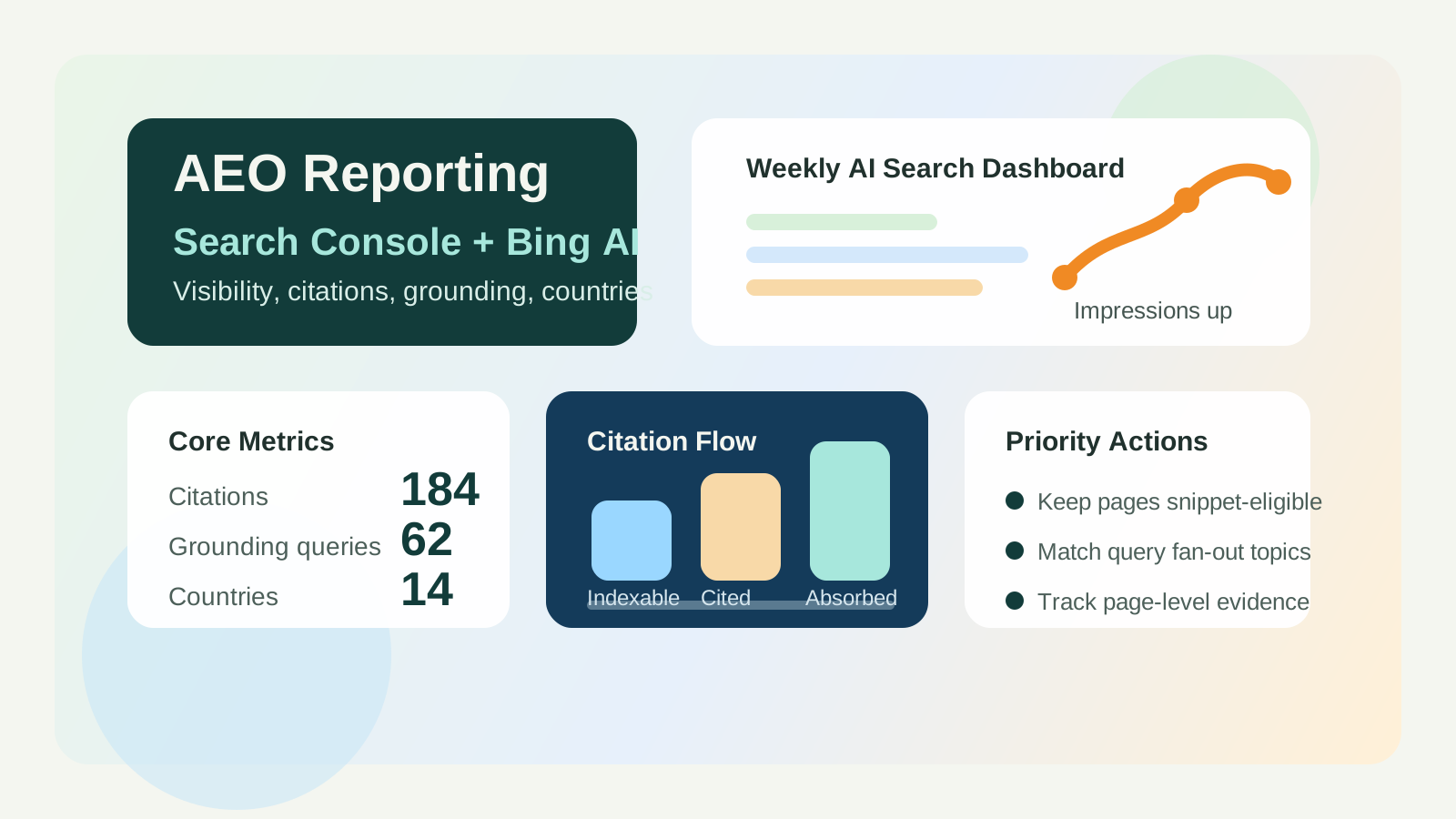
A practical AEO playbook for Google's new AI Search controls and reporting, combining Search Console signals, Bing AI Performance, and citation-absorption research.
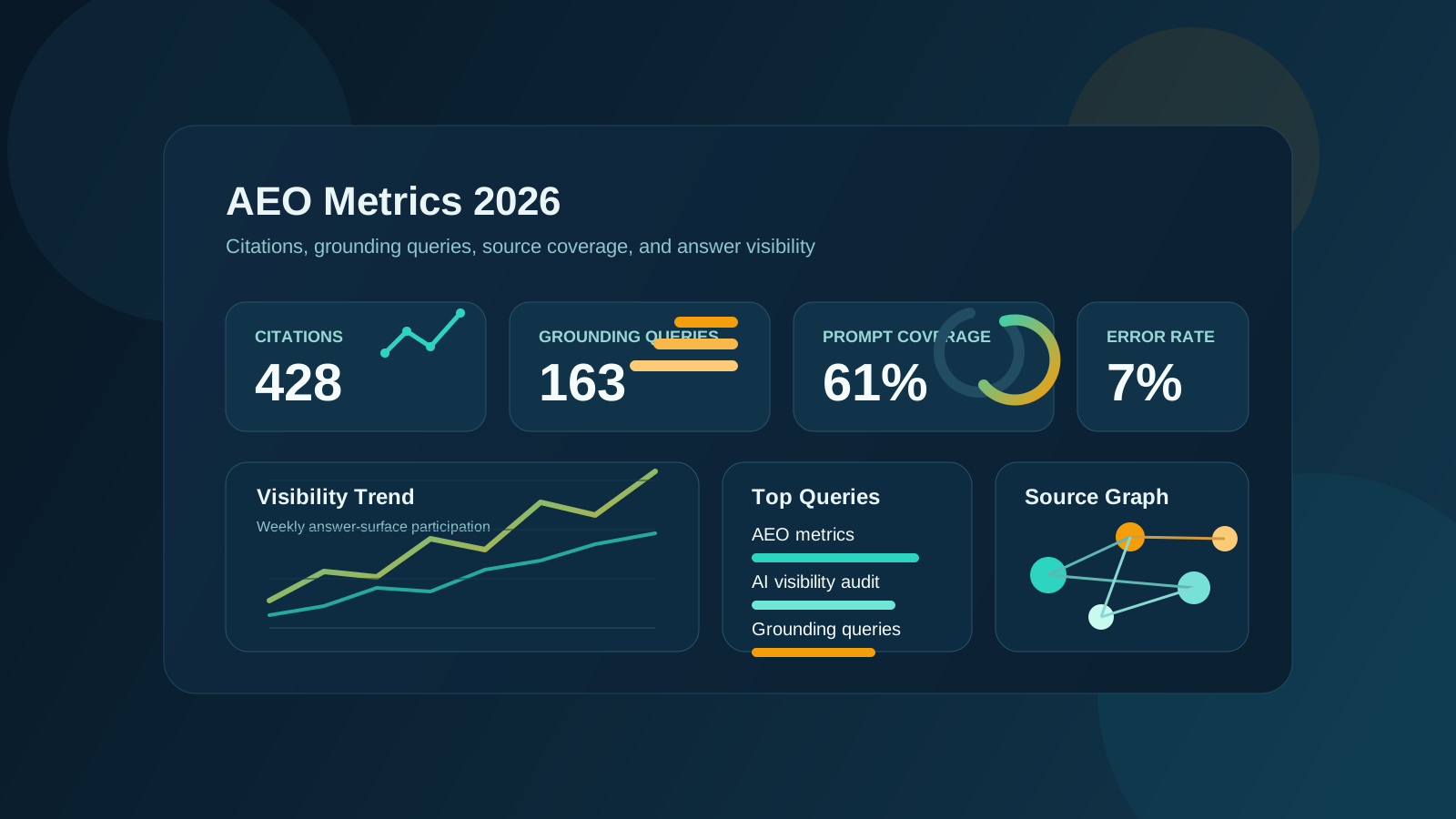
A practical AEO measurement framework built around Bing AI Performance, Google's latest AI Search updates, ChatGPT shopping research, and citation-quality audits.
A practical playbook for turning your website, brand facts and external proof into evidence that ChatGPT, Gemini, Copilot, Perplexity and AI search systems can use.

We are testing AEO on a real local business and documenting the process from technical crawl access to entity signals and external sources.
AI answers are shaped by the sources that models can retrieve, trust and synthesize. Here is what that means for company visibility.

Traditional SEO still matters, but generative engine optimization changes the unit of visibility from ranking pages to being understood, cited and recommended.

One prompt is not a KPI. AI visibility should be tracked with repeated samples, prompt portfolios, source maps and competitor context.